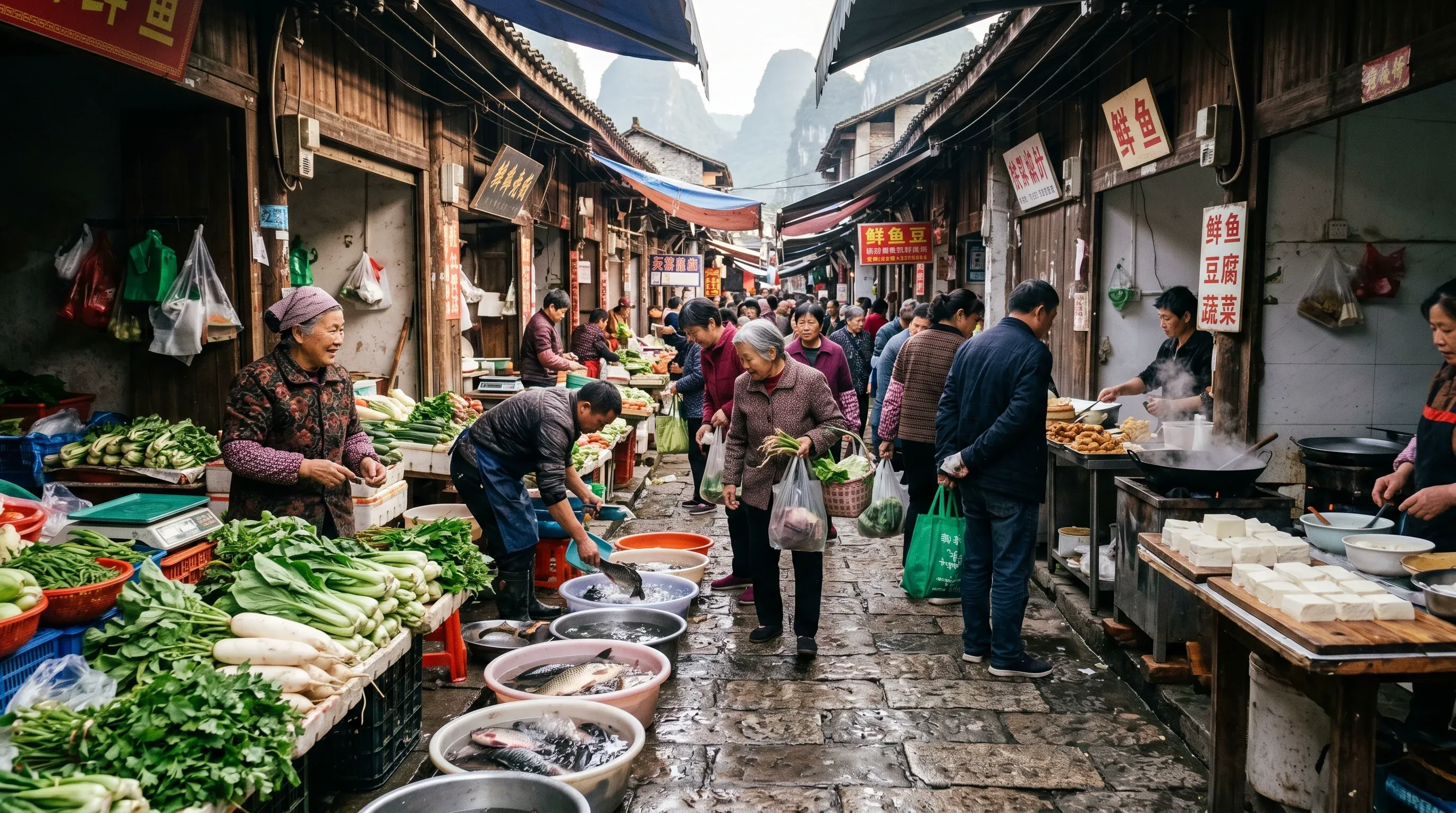
Beyond West Street: Finding the Real Yangshuo
Yes, West Street is touristy. But walk 15 minutes in any direction and you'll find rice paddies, water buffalo, and villages where daily life continues unchanged. Here's your guide to authentic Yangshuo in 2026.
Content researched and verified against official local operators and regional tourism sources.
The Honest Truth About Yangshuo
Yangshuo transformed from a quiet backpacker village in the 1980s to a major tourism hub. West Street now has Starbucks, KFC, and hundreds of souvenir shops. But here's what makes Yangshuo unique: the karst mountains physically prevent sprawl.
Unlike other Chinese tourist cities that expand endlessly, Yangshuo's geography keeps the commercial zone small. This means authentic rural life exists just meters away from the tourist center. The question isn't "Is Yangshuo authentic?" but rather "Do you know where to look?"
The Geography of Authenticity
Heavy Tourist Zones
- •West Street (西街) – Main pedestrian street with bars, restaurants, shops. Peak hours: 7PM-11PM
- •Ten Mile Gallery (十里画廊) main road – Tour buses stop at set viewpoints
- •Yulong River bamboo raft piers – Peak times: 10AM-3PM
- •Impression Liu Sanjie theater area – Crowds before/after show times
Authentic Zones
- •Jiuxian Village (旧县) – Ancient architecture, working farms, elderly residents
- •Fuli Ancient Town (福利古镇) – Market days (every 3 days), hand-painted fans
- •Baisha & Puyi villages – Rice paddies, farmers using water buffalo
- •Back roads of Yulong River – Any path away from piers (bicycle required)
Pro Tip: The 500-Meter Rule
If you're within 500 meters of a tour bus parking area or main road, you're in the tourist zone. Walk, cycle, or take a side path 500+ meters away, and you'll find authentic village life. GPS your location and explore systematically.
Cycling Routes to Hidden Yangshuo
The best way to reach authentic areas is by bicycle. Rent from any West Street shop (¥20-30/day) and follow these routes away from tour bus zones.
1. Jiuxian Village Loop
12km • Easy • 1.5 hours
Start from West Street, head north past Yangshuo Park, cross the bridge, and follow signs to Jiuxian (旧县). The village features Ming and Qing Dynasty architecture, stone pathways, and elderly residents playing mahjong. Market days bring local farmers.
2. Fuli Ancient Town Circuit
18km • Moderate • 2.5 hours
Cycle east along the Li River to Fuli (福利), famous for hand-painted fans. Visit on market days (every 3rd day of the lunar calendar) to see farmers selling produce, live chickens, and local crafts. Some elderly artisans still paint fans by hand in small workshops.
3. Yulong River Back Roads
25km • Moderate • 3-4 hours
Instead of the main Yulong River route, take any unmarked farm roads parallel to the river. You'll pass farmers tending rice paddies, water buffalo cooling in ponds, and villages with zero tourist infrastructure. Bring offline maps, you'll get "lost" in the best way.
4. Sunrise Rice Paddy Route
8km • Easy • 1 hour
Leave West Street at 6:00 AM and cycle toward any unnamed karst peak. The rice paddies are mirror-still at dawn, reflecting the mountains. Farmers start work around 6:30 AM. This is when you'll see authentic agricultural life before tourists wake up.
Safety Note: Stick to bicycles, not electric scooters. E-bikes require a Chinese license and are frequently checked by police. Bicycles are legal, safer on rural roads, and more environmentally friendly.
Early Morning: When Locals Own Yangshuo
Tourists sleep until 9 AM. Locals live between 6:00-8:30 AM. This is your window for authentic experiences.
Yangshuo Park (6:00-8:00 AM)
Located near Moon Hill Road (明月峰旁 - Míngyuè Fēng páng), this is where local residents gather for morning tai chi, traditional dance, badminton, and card games. Elderly men practice calligraphy with water brushes on the pavement.
- Tai chi groups welcome observers
- Traditional music performances
- Zero tourist infrastructure
Li River Waterfront (6:30-7:30 AM)
Before cruise boats start (9 AM), the Li River waterfront is quiet. Local fishermen prepare bamboo rafts, elderly residents practice exercises, and the morning mist creates dramatic landscapes for photography.
- Fishermen with cormorants (some areas)
- Empty river reflections
- Locals washing vegetables
Cultural Etiquette for Morning Activities
- • Observe respectfully – Don't interrupt tai chi or dance groups
- • Ask before photographing people – Use gestures if no common language
- • Learn basic phrases – "Nǐ hǎo" (你好 - Hello), "Xièxiè" (谢谢 - Thank you)
- • Support local breakfast vendors – Try rice noodles (米粉 - mǐfěn) or steamed buns
Lesser-Known Villages Worth Visiting
Baisha (白沙)
Small village south of Yangshuo with working rice paddies and traditional stone houses. Zero tourist shops.
Distance: 6km south • Bike: 25 min
Puyi (普益)
Agricultural village with fruit orchards (pomelo, kumquat). Farmers sell directly from homes during harvest season.
Distance: 8km east • Bike: 30 min
Liugong (留公)
Ancient village with stone bridges and elderly residents still wearing traditional clothing. Extremely quiet.
Distance: 10km west • Bike: 35 min
Photography Spots for Authentic Yangshuo
Best Times for Photos
- • Dawn (6:00-7:00 AM) – Mist on rice paddies, empty landscapes
- • Late afternoon (4:00-5:30 PM) – Golden light on karst peaks
- • After rain – Dramatic clouds wrapping mountains
Authentic Photo Subjects
- • Water buffalo in rice paddies (common in Baisha, Puyi)
- • Farmers hand-planting rice (April-May)
- • Traditional architecture in Jiuxian Village
- • Elderly residents at morning tai chi
- • Hand-painted fan workshops in Fuli
Respectful Photography: Always ask permission before photographing people. Many elderly residents appreciate small gifts (fruit, packaged snacks) as a thank-you gesture. Learn the phrase "Kěyǐ pāizhào ma?" (可以拍照吗?- May I take a photo?)
Plan Your Authentic Yangshuo Experience
Now that you know where to find the real Yangshuo, explore our other guides to make the most of your visit.