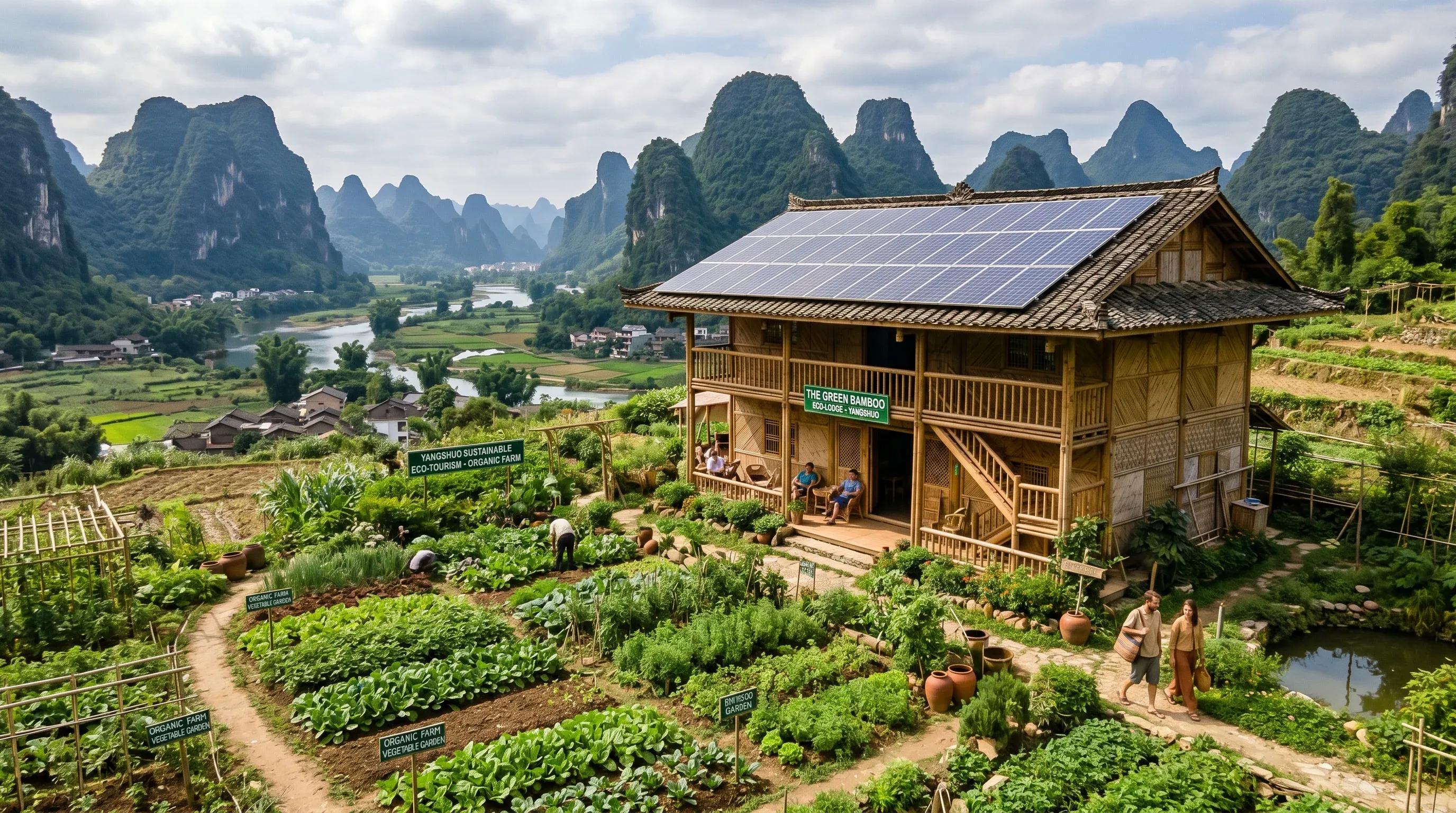
Sustainable Travel in Yangshuo: The Complex Reality
Tourism brought prosperity to Yangshuo, but also environmental stress and commercialization. Here's an honest look at tourism's impact and how you can travel more responsibly in 2026.
Content researched and verified against official local operators and regional tourism sources.
The Real Impact: What Tourism Did to Yangshuo
Sustainable travel starts with honesty. Yangshuo's case is complex: tourism simultaneously lifted the region out of poverty and fundamentally changed its character. Here's the balanced truth.
Positive Impacts
- Economic Development: Average local incomes increased 10-20x since the 1990s. Children gained access to education and healthcare.
- Infrastructure Improvements: Paved roads, reliable electricity, internet connectivity, modern sanitation systems.
- Preservation Incentive: The karst landscape became economically valuable, reducing the temptation to quarry mountains or develop agricultural land.
- Cultural Pride: International recognition restored local pride in traditional culture, architecture, and landscapes.
- Youth Opportunity: Young people can stay in the region (tourism jobs) instead of migrating to cities for factory work.
Negative Impacts
- •Commercialization: West Street transformed from authentic village street to themed tourist zone. Cultural authenticity sacrificed for profitability.
- •Environmental Stress: Li River pollution from tour boats, trash accumulation, water quality degradation in peak season.
- •Noise Pollution: West Street bars operate until 2-3 AM, disturbing residential areas. Tour bus horns, megaphones, crowds.
- •Price Inflation: Local residents priced out of central areas. Cost of living increased faster than non-tourism wages.
- •Cultural Erosion: Traditional festivals now performative for tourists. Genuine community practices declining.
The Verdict: Tourism Is Not Inherently Good or Bad
Tourism is a tool. Yangshuo shows both its benefits (economic development, infrastructure) and costs (commercialization, environmental stress). As a visitor, you participate in this system. The question is: How can you maximize the benefits and minimize the harms?
12 Ways to Travel More Sustainably in Yangshuo
1. Choose Local Accommodation Over Chains
Book family-run guesthouses (民宿 - mínSÙ) instead of international hotel chains. Your money stays in the local economy, you'll get authentic cultural interactions, and smaller properties typically have lower environmental footprints.
2. Cycle Instead of Using E-Scooters or Cars
Bicycles have zero emissions, require no charging (reducing electricity demand), and keep you quiet on rural roads. E-scooters contribute to noise pollution and battery waste. Cars worsen traffic congestion and air quality.
3. Visit During Shoulder Seasons
Travel in March-April or November instead of peak summer/Golden Week. This reduces infrastructure strain (water, waste management, electricity) during periods when systems are already overloaded.
4. Support Local Markets and Farmers
Buy snacks and fruit directly from farmers at morning markets or roadside stalls. Eat at family-run restaurants instead of KFC/McDonald's. Hire local guides instead of large tour companies.
5. Minimize Single-Use Plastics
Bring a reusable water bottle (refill at accommodations), refuse plastic bags at shops, carry your own chopsticks to avoid disposable ones. Yangshuo's waste management is strained, reducing your waste output helps.
6. Respect Residential Quiet Hours (10 PM - 7 AM)
Locals live in the same areas tourists party. Keep noise down after 10 PM. Avoid loud morning activities before 7 AM in residential areas. Noise pollution is one of the most common local complaints.
7. Ask Permission Before Photographing People
Elderly farmers and residents are not museum exhibits. Always ask permission (gesture works). Offer small gifts (fruit, packaged snacks) as thank-you gestures if taking portraits.
8. Conserve Water
Take shorter showers, reuse towels, don't run water continuously while brushing teeth. Yangshuo's water supply is stressed during peak tourism months when millions of visitors increase demand.
9. Stay on Designated Paths and Trails
Don't create new trails or shortcuts in rice paddies or karst hillsides. Erosion from off-trail hiking damages fragile landscapes. Respect "No Entry" signs, they're often protecting sensitive areas.
10. Learn Basic Mandarin Phrases
Learning "你好" (nǐ hǎo - hello), "谢谢" (xièxiè - thank you), "多少钱?" (duōshǎo qián - how much?) shows cultural respect and improves interactions with local residents who don't speak English.
11. Avoid Large Tour Groups
Large bus tours create congestion, noise, and concentrated environmental impact at specific sites. Independent travel or small guided groups (2-6 people) distribute impact more evenly.
12. Length of Stay Matters
Stay 3-5 days instead of rushing through in 1-2 days. Longer stays reduce per-day transportation emissions, allow for slower exploration (less rushed transport), and contribute more to local economy.
Choosing Responsible Tour Operators
Not all tour companies operate the same way. Look for these indicators of responsible tourism practices:
✓ Good Signs
- • Employs local guides (not imported from cities)
- • Small group sizes (6-12 people max)
- • Provides reusable water bottles instead of plastic
- • Includes cultural education (not just sightseeing)
- • Partners with local communities for homestays
- • Has waste collection/recycling practices
- • Contributes to local conservation projects
Red Flags
- • Mega-buses (40+ people)
- • Rushed schedules (3 attractions in 2 hours)
- • Shopping stops included in "sightseeing" tours
- • Megaphone use disturbing quiet areas
- • No visible waste management practices
- • Guides from outside the region
- • Rock-bottom prices (someone's being exploited)
Sustainable Tourism Starts With You
Every visitor makes choices that either harm or help Yangshuo. Now that you know the impacts, explore how to find authentic experiences that benefit local communities.