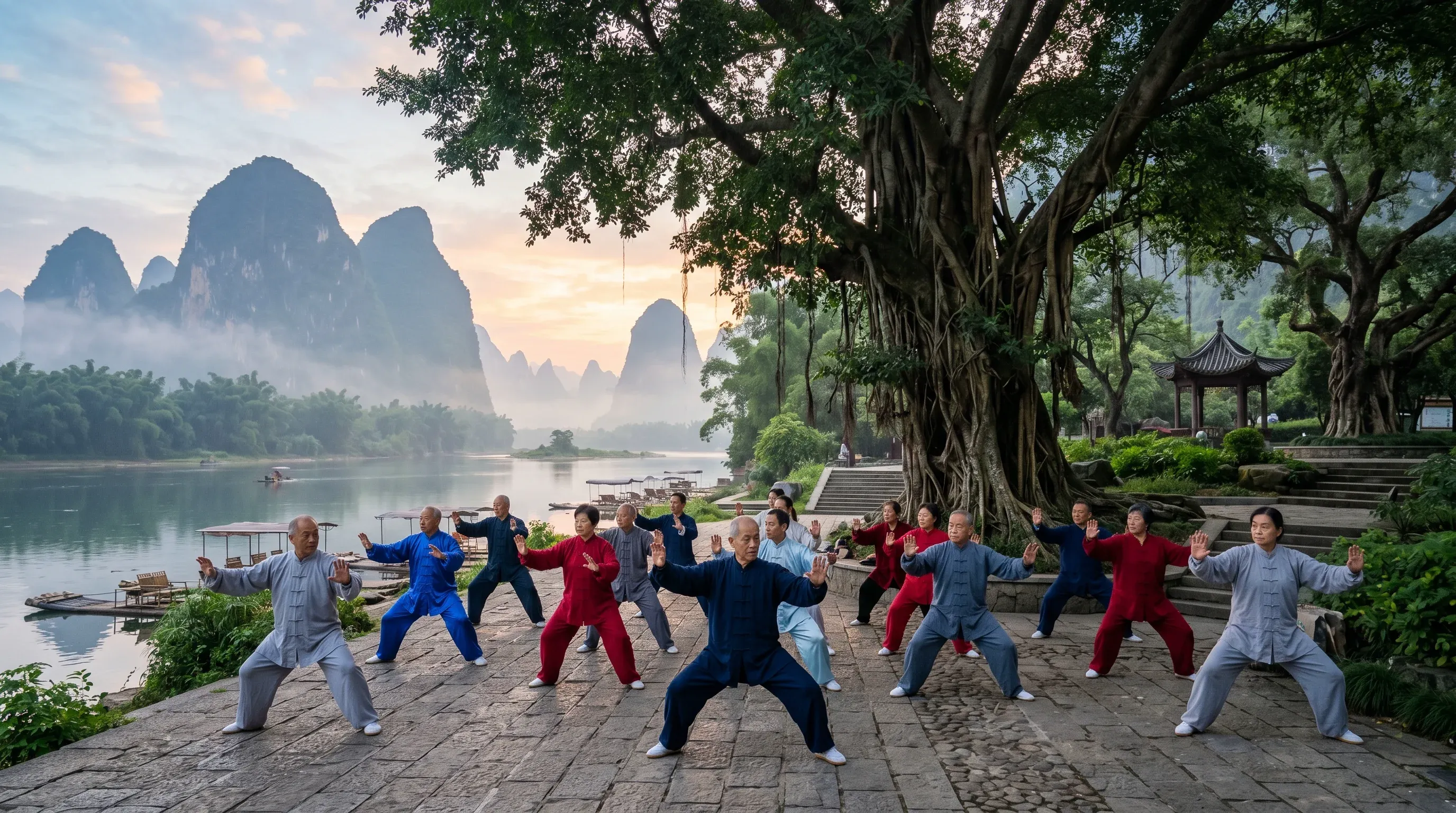
Local Life: Yangshuo Before Tourists Wake Up
Between 6:00 and 8:30 AM, Yangshuo belongs to its residents. Morning tai chi, calligraphy with water brushes, traditional dance, this is when you'll see authentic local life before the tourist day begins.
Content researched and verified against official local operators and regional tourism sources.
The 6:00-8:30 AM Window
Tourists sleep until 9 AM, wake up, eat hotel breakfast, then hit attractions around 10 AM. Locals live a completely different schedule. They wake around 5:30-6:00 AM, practice morning exercises, eat breakfast at street stalls, and start their workday by 8:30 AM.
This 2.5-hour morning window is your opportunity to see the "real Yangshuo": the town as it exists for the people who actually live here, not the performance for tourists that begins mid-morning.
Yangshuo Park: The Heart of Morning Life
Yangshuo Park (阳朔公园 - Yángshuò Gōngyuán), also called the Central Park near Moon Hill Road (明月峰旁 - Míngyuè Fēng páng), is Where elderly residents gather for morning activities. This isn't a tourist attraction, it's a genuine community space.
What You'll See
- Tai Chi Groups (太极拳): 20-30 elderly practitioners moving in synchronized slow motion. Various styles (Yang, Chen, Wu). Usually 6:30-7:30 AM.
- Traditional Dance (广场舞): Line dancing to traditional Chinese music. Often elderly women in colorful outfits. 6:00-7:00 AM.
- Water Calligraphy (地书): Elderly men write Chinese characters on pavement with water brushes. Characters evaporate in minutes, the art is temporary.
- Badminton & Sports: Informal games, rope jumping, simple calisthenics.
- Card Games & Mahjong: Groups of elderly men playing Chinese chess (象棋) or card games on benches.
Practical Information
Near Moon Hill Road, 10-minute walk from West Street. Ask locals for "阳朔公园" (Yángshuò Gōngyuán).
6:00-8:00 AM daily. Peak activity 6:30-7:30 AM. Mostly empty after 9 AM.
Free. Public park with no entrance fee.
Daily year-round. Weather cancels (heavy rain), but resumes next day.
Cultural Context: Chinese Morning Exercise Culture
Morning exercise in public parks is a deeply ingrained Chinese cultural practice, especially among retirees. It serves social (community bonding), health (preventive care), and philosophical (harmony with nature at dawn) purposes.
Unlike gym culture in the West, Chinese morning exercise is communal, free, and intergenerational. It's not about performance or fitness goals, it's about daily routine, social connection, and maintaining health through gentle movement.
Li River Waterfront: Fishermen & Morning Market
Early Morning Scenes (6:30-7:30 AM)
- •Bamboo Raft Fishermen: Traditional fishermen preparing rafts, nets. Some use cormorants for fishing (trained birds that dive for fish).
- •Vegetable Washing: Local residents wash vegetables in the river for daily cooking.
- •Morning Mist: Fog rolling off water creates dramatic karst mountain landscapes perfect for photography.
- •Exercise Walkers: Local residents power-walking along waterfront path.
Photography Tips
- Golden hour: 6:30-7:30 AM (soft light)
- Bring tripod for low-light mist shots
- Fishermen don't mind photos (but ask with gesture)
- Reflections best when water is still (before boats)
- Avoid photographing people washing/bathing
Local Breakfast Culture
Forget hotel buffets. Real Yangshuo breakfast happens at street-side stalls and local eateries where workers and residents eat before their day starts.
What Locals Eat for Breakfast
Main Dishes
- 米粉 (Mǐfěn) - Rice Noodles: Guilin's signature breakfast. Thin rice noodles in broth with pickled vegetables, peanuts, meat. ¥8-15.
- 包子 (Bāozi) - Steamed Buns: Filled with pork, vegetables, or sweet bean paste. ¥2-4 each.
- 油条 (Yóutiáo) - Fried Dough Sticks: Crispy fried dough dipped in soy milk or congee. ¥3-5.
- 豆浆 (Dòujiāng) - Soy Milk: Fresh, warm, slightly sweet or savory. ¥3-5.
How to Order
- 1. Point at food (most stalls display options)
- 2. Hold up fingers for quantity
- 3. Pay via Alipay/WeChat QR code or cash
- 4. Eat standing at counter or take away
- • "一碗米粉" (Yī wǎn mǐfěn) = One bowl rice noodles
- • "两个包子" (Liǎng gè bāozi) = Two steamed buns
- • "多少钱?" (Duōshǎo qián?) = How much?
Pro Tip: Look for stalls with locals (especially workers in uniform or elderly residents). Avoid empty stalls near tourist areas. Best breakfast spots are within 2-3 blocks of West Street but not ON West Street.
Cultural Etiquette for Observing Local Life
You're a guest in these community spaces. Here's how to observe respectfully without disrupting daily life:
✓ Do This
- Observe from the edges, don't interrupt activities
- Smile and nod if making eye contact
- Ask permission before photographing people (gesture works)
- Learn basic phrases: "你好" (Nǐ hǎo - Hello), "谢谢" (Xièxiè - Thank you)
- Join tai chi if groups gesture you in (stand at back, mimic movements)
- Offer small gifts if taking portraits (fruit, packaged snacks)
- Stay quiet, this is their time, not a performance for tourists
Don't Do This
- • Don't walk through the middle of tai chi groups
- • Don't photograph people without asking first
- • Don't make loud tourist commentary ("Oh how exotic!")
- • Don't arrive in large tour groups (disrupts community space)
- • Don't mock or laugh at activities you don't understand
- • Don't photograph people bathing or in vulnerable moments
- • Don't come after 9 AM expecting morning activities (they're done)
Why This Matters
Yangshuo residents share their town with millions of tourists annually. Morning hours are their time, one of the few periods when they can practice community activities without tourist disruption. By observing respectfully, you're showing that you value them as people, not attractions. This is the difference between cultural tourism (learning and respecting) and cultural voyeurism (gawking and exploiting).
Experience the Real Yangshuo
Now that you know when and where to find authentic local life, explore more ways to connect with Yangshuo beyond the tourist experience.