Marie's Yangshuo Story: Ruyi Peak and the Long Bamboo Route on the Yulong River
Marie, the travel photographer behind @coffee_with_marie, on the glass bridge at Ruyi Peak and why she chose the longest bamboo rafting route on the Yulong River.
First-hand visitor account, cross-checked against VisitYangshuo.com's Attractions Guide and Bamboo Rafting Guide.
Highlights: Yangshuo at a Glance
- •Ruyi Peak combines a cable car, suspension bridge and glass-bottom cliff walk for around ¥240, including the cable car.
- •Marie called the outing “incroyable” and rated it one of the clearest must-do items in Yangshuo.
- •The long bamboo rafting route on the Yulong River starts quiet, then gets busier with rafts queuing in the second half.
- •The short route is likely cheaper, but trades away some of the authenticity Marie valued most.
Ruyi Peak Through Marie's Lens
Marie's own photos from the cable car, the suspension bridge, and the glass walkway back down.
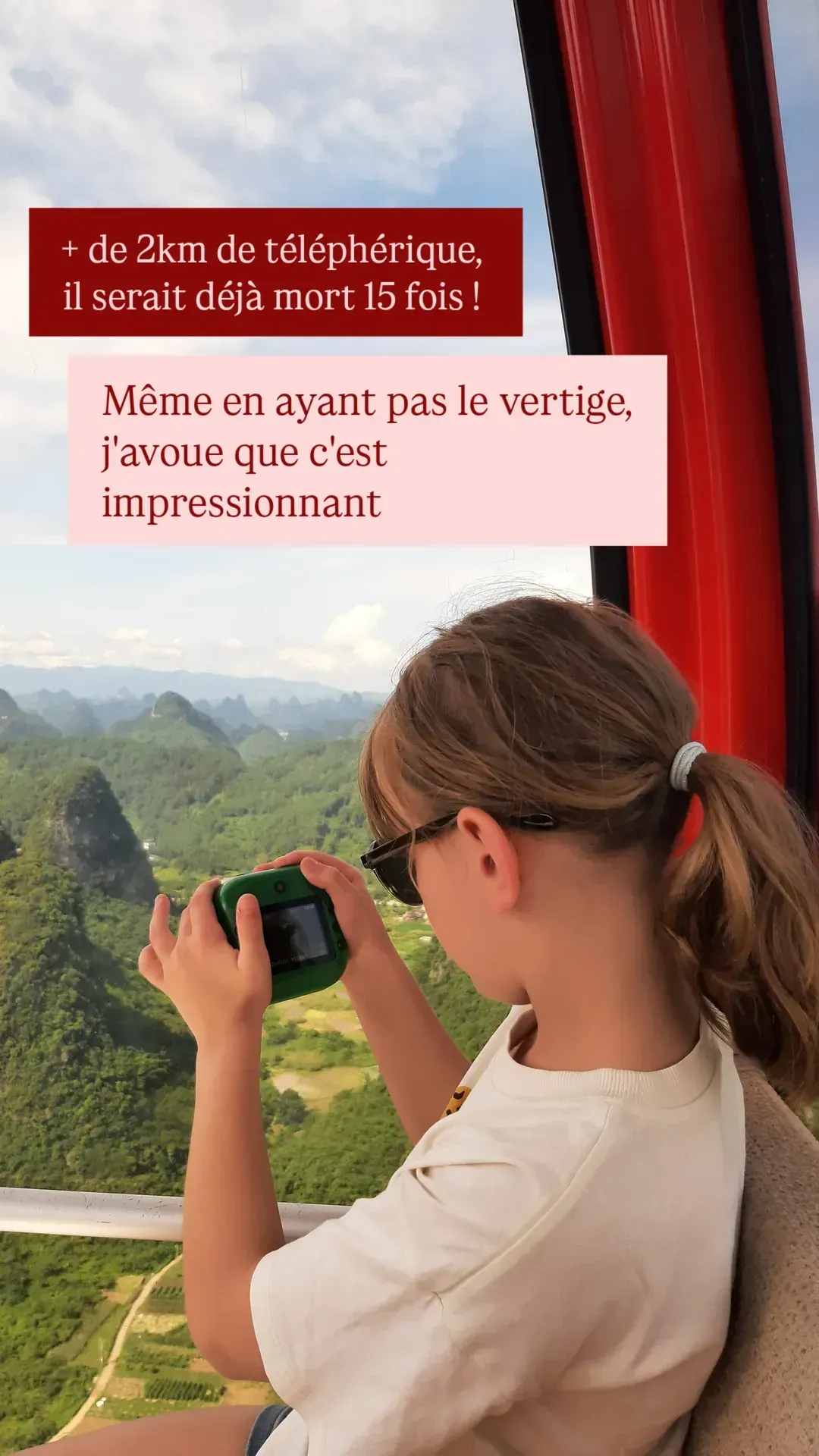
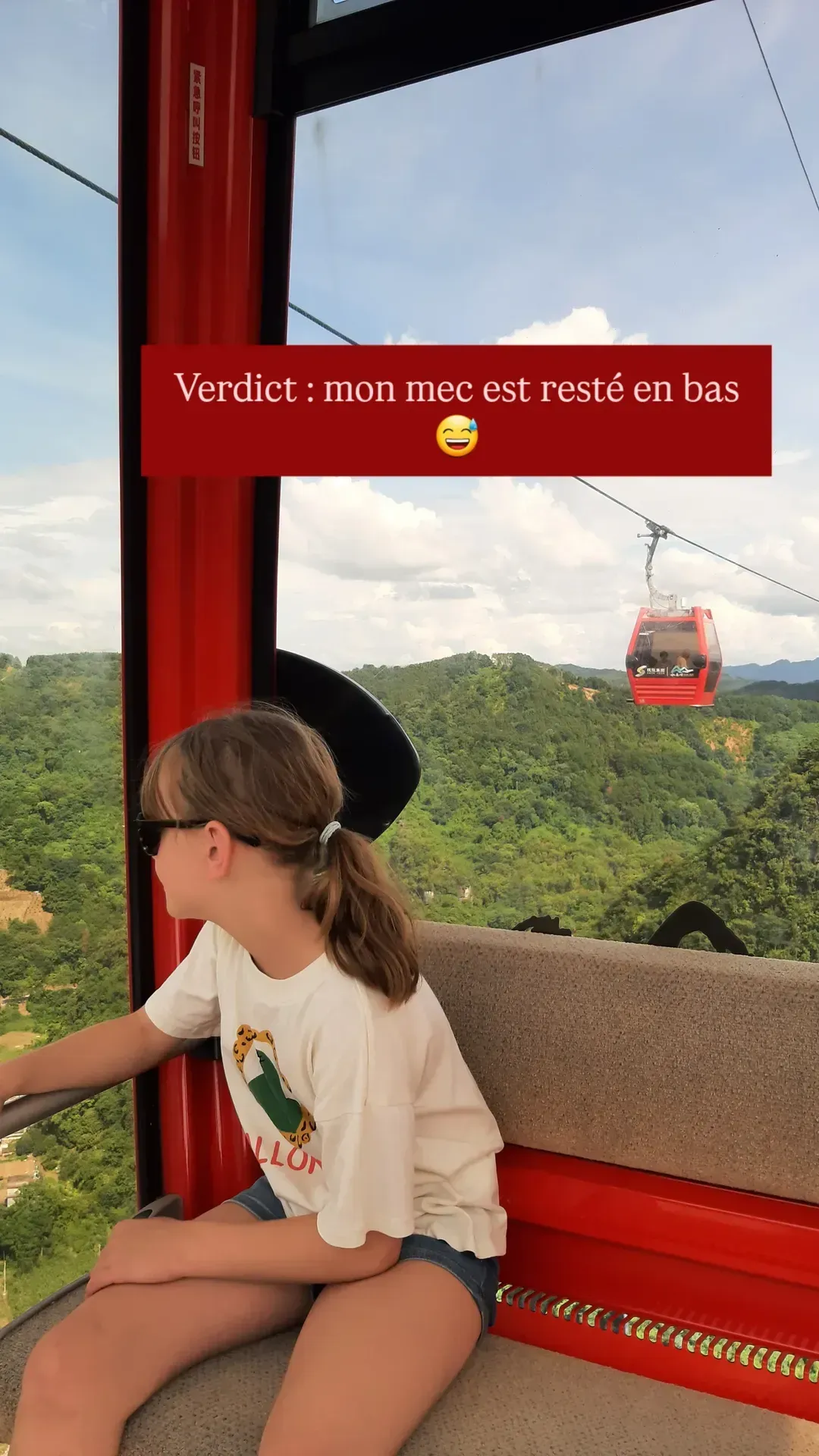
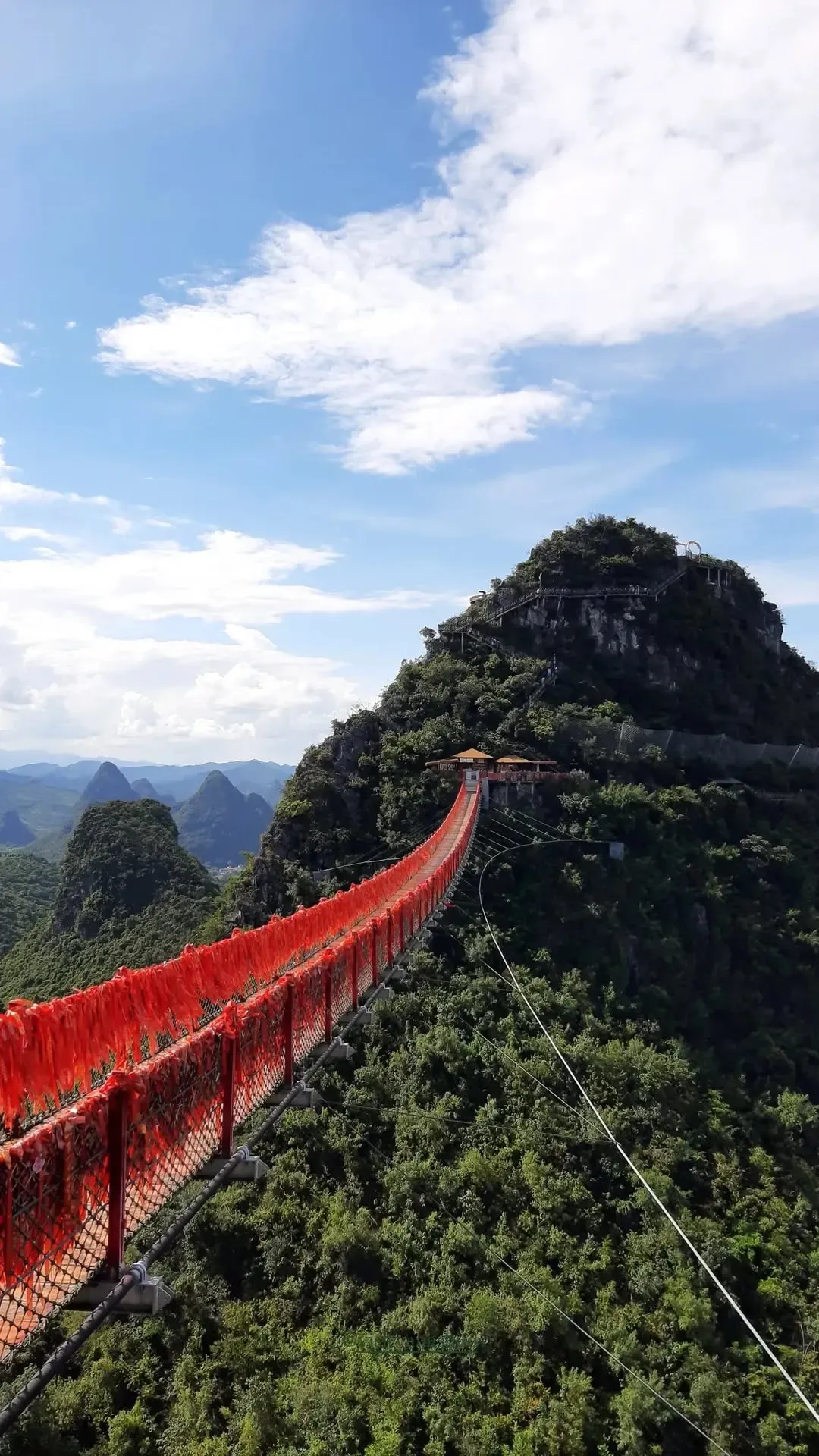
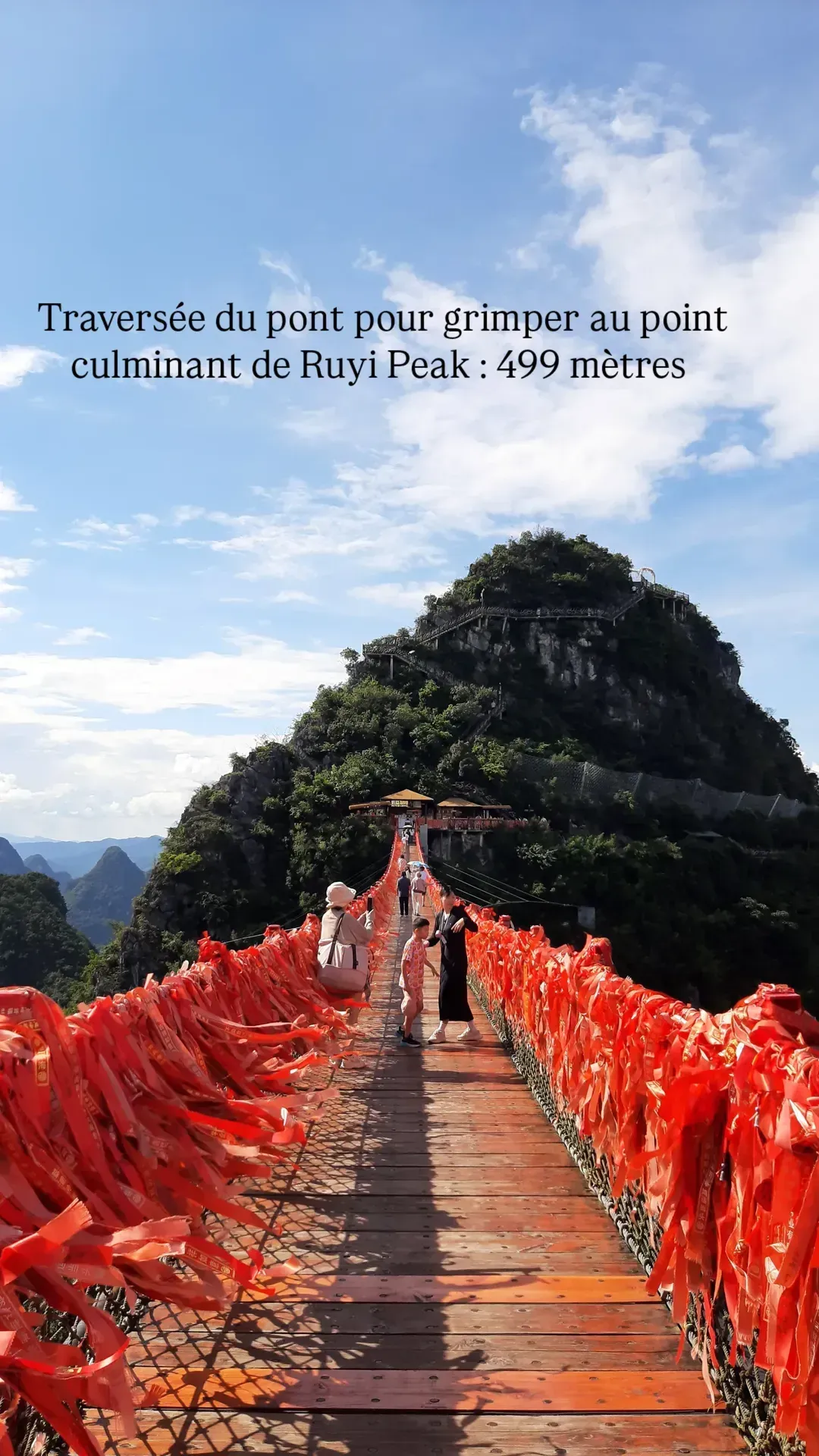
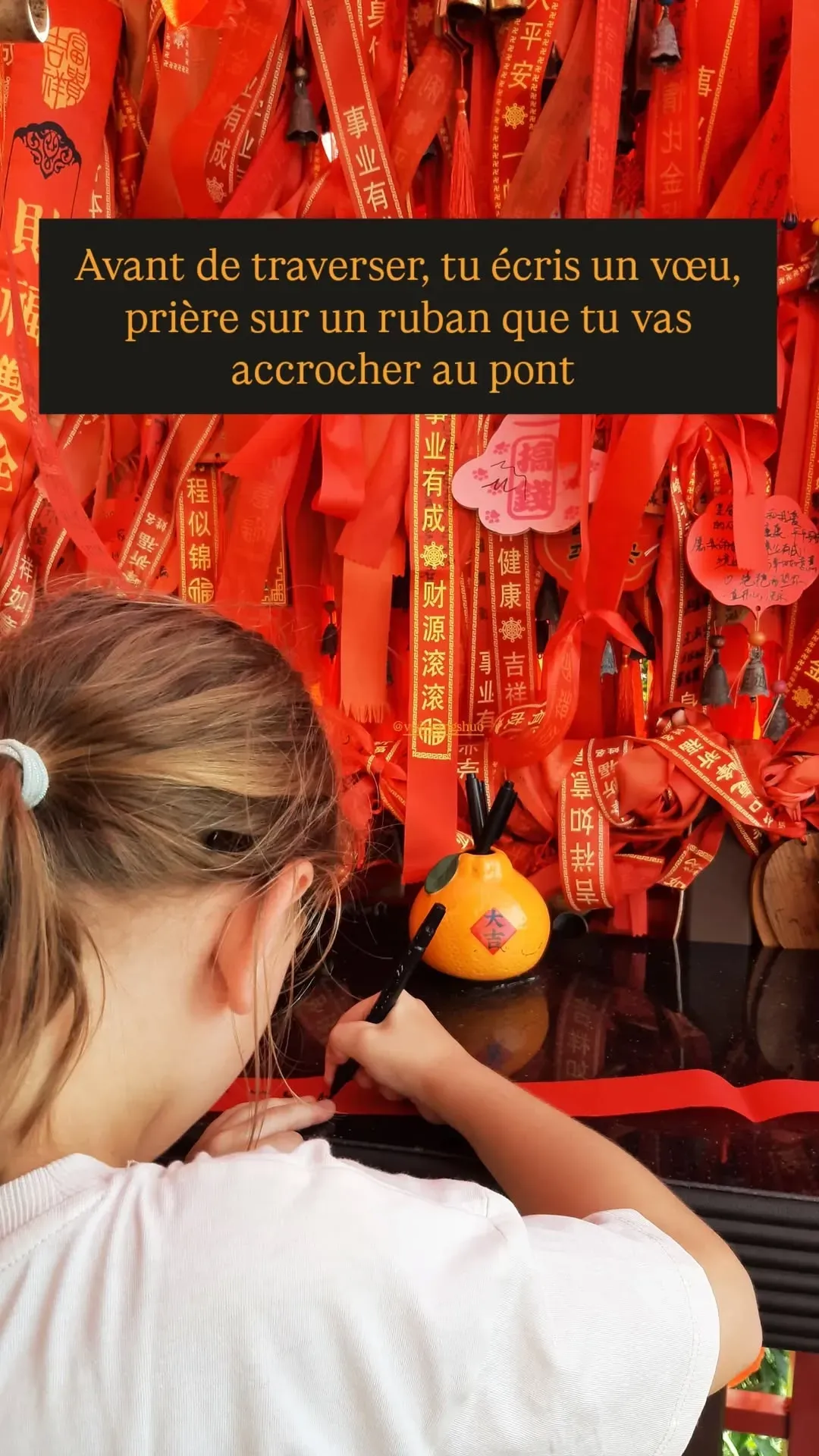
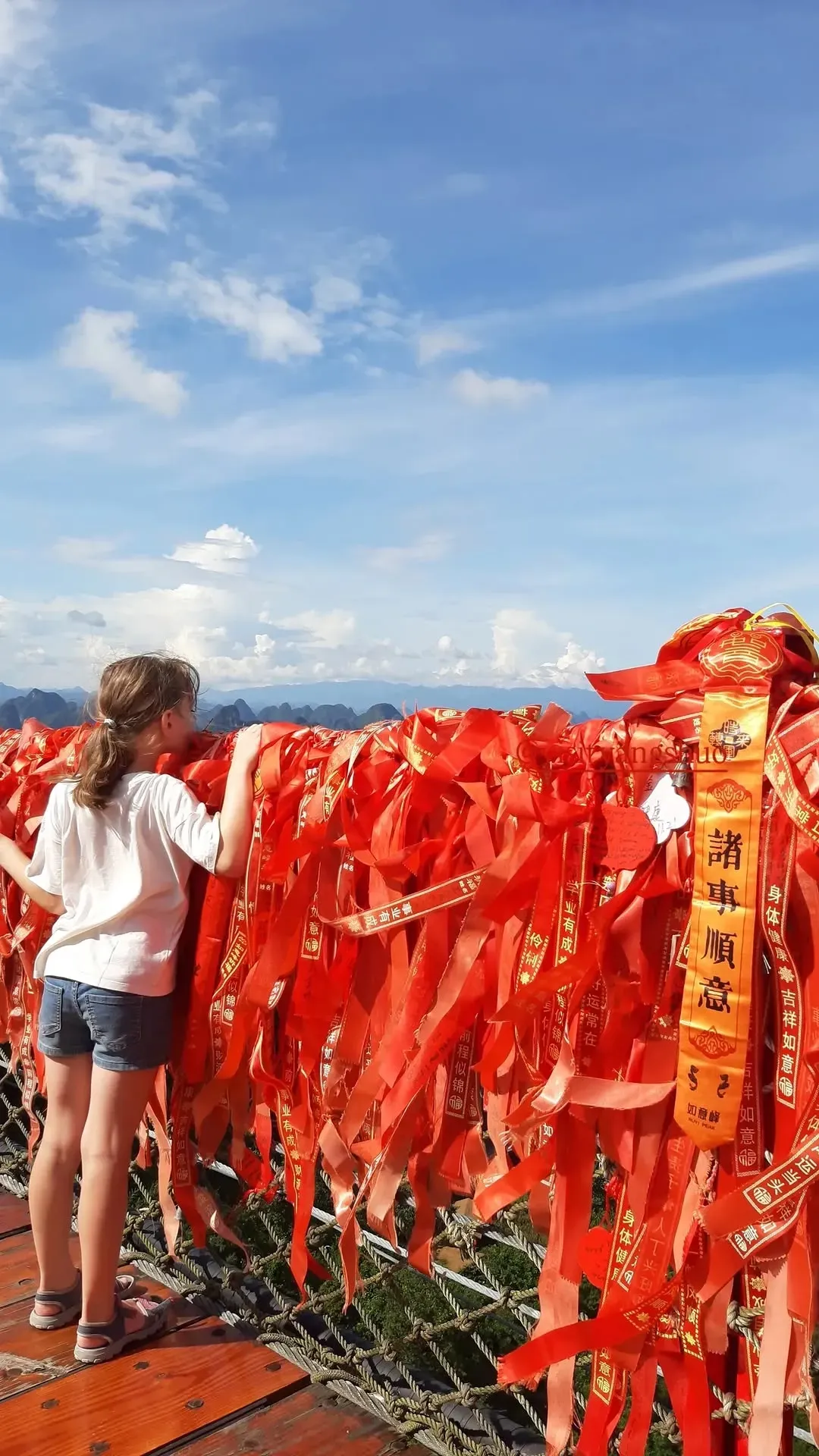
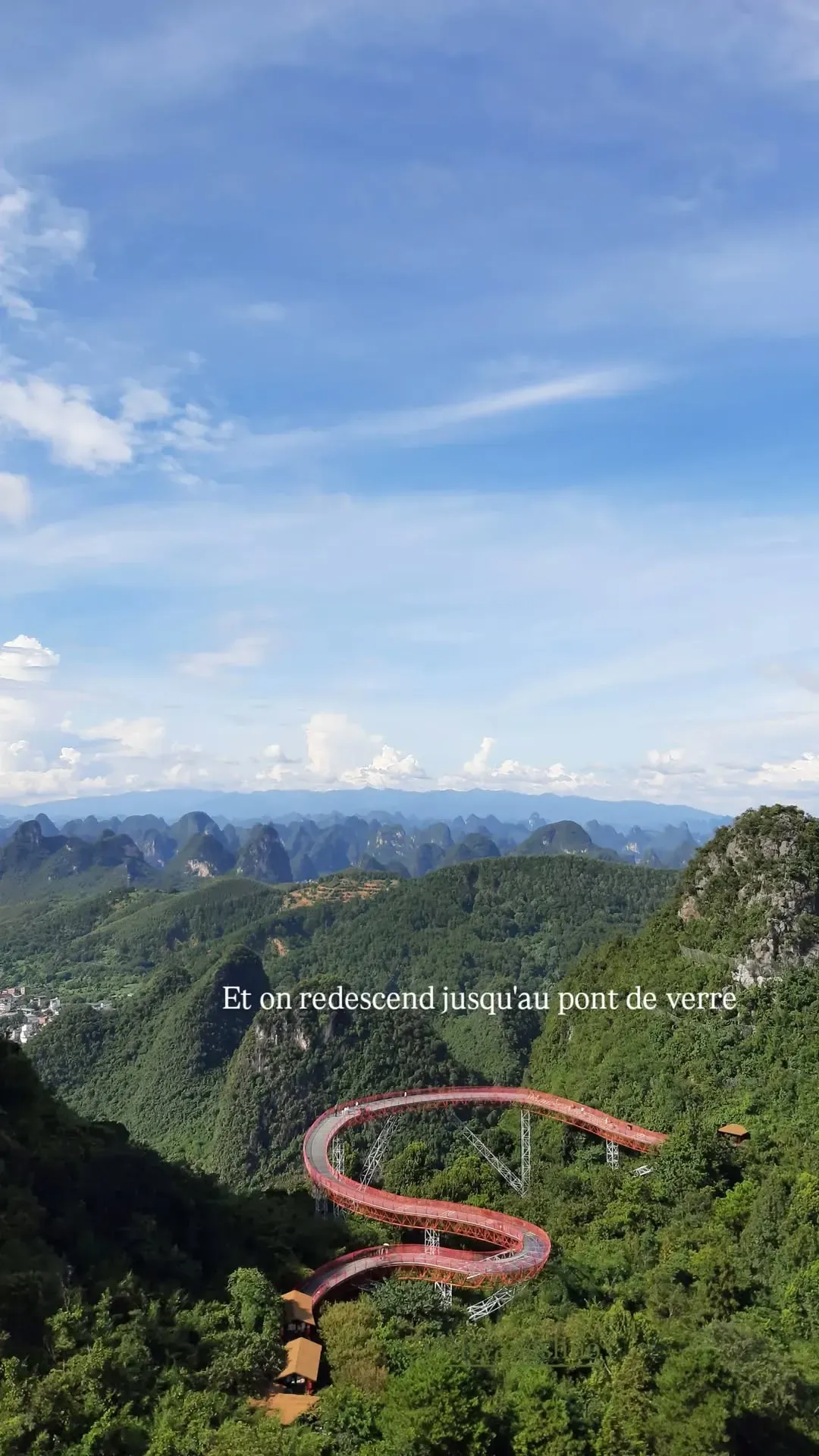
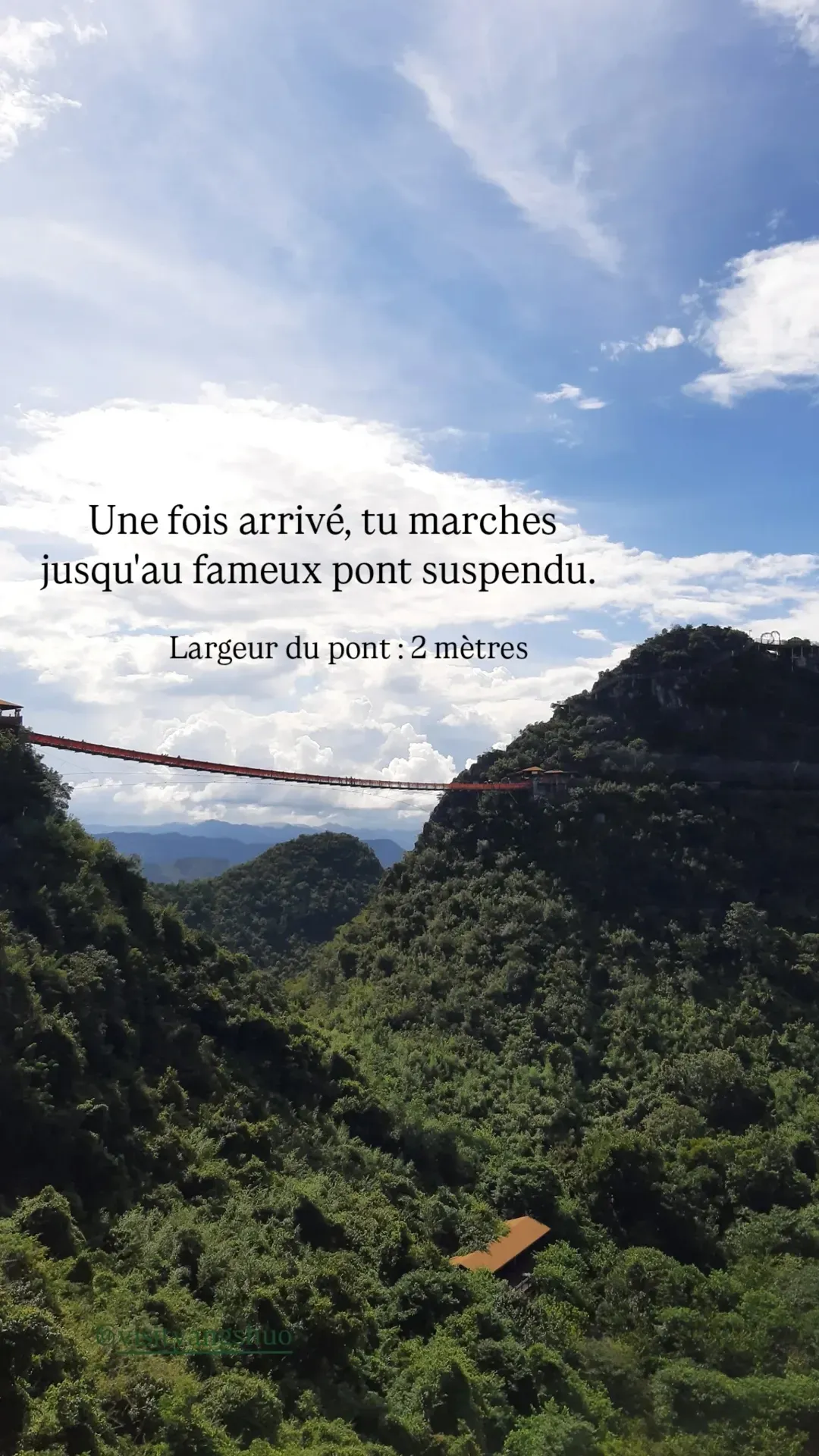
Marie, the travel photographer behind @coffee_with_marie, calls her trip up Ruyi Peak "incroyable" (French for "incredible," a word French speakers often reach for when something moves them more than everyday language can capture) and points to the longest stretch of the Yulong River as the bamboo rafting route that keeps its quiet, authentic character. Both experiences reward travelers willing to trade the quick, easy option for the fuller version of Yangshuo.
Why did Marie call Ruyi Peak incroyable?
Ruyi Peak sits among Yangshuo's newer attractions, and Marie's account explains why it has become one of the region's most talked-about outings. The visit starts with a cable car ride up into the karst peaks, already enough on its own to reset how a first-time visitor sees the landscape below. From there, the route continues across a suspension bridge, then onto a glass-bottom plank road bolted to the side of a cliff, before opening up at a series of panoramic viewpoints. Marie's verdict was simple: worth every yuan, and one of the clearest must-do items on her Yangshuo list.
According to VisitYangshuo.com's own Yangshuo Attractions Guide, entry including the cable car runs around ¥240, which lines up with Marie describing the outing as good value for what you get, rather than a tourist trap dressed up as an attraction. That price also covers the on-site digital museum, a small immersive room with a 180-degree screen that plays a short film about Yangshuo.
What's actually included in the Ruyi Peak experience?
- 1. Cable car ascent from the base into the karst peaks, with the views opening up gradually rather than all at once.
- 2. Suspension bridge crossing, often decorated with traditional red wish ribbons tied by earlier visitors.
- 3. Glass-bottom plank road, a walkway fixed directly to the cliff face with a transparent section underfoot.
- 4. Panoramic viewpoints along the top, giving a wide, uninterrupted view over the karst landscape.
- 5. Digital museum, a small immersive room with a 180-degree screen showing a short film about Yangshuo, included in the entry price.
- 6. Return route back down, usually via the same cable car.
Is Ruyi Peak worth it if heights make you nervous?
Short answer: think carefully before you commit to the glass section. Marie was upfront that this is not an attraction for anyone with a serious fear of heights, since the glass-bottom walkway puts you directly over open air with nothing but a transparent panel underneath. If that sounds manageable, the payoff is a view she rated among the best in the entire region. Visitors who know heights are a genuine problem may prefer to enjoy the cable car and suspension bridge and skip lingering on the glass panels, since the viewpoints beyond are reachable without dwelling on that one stretch.
What was the long bamboo rafting route on the Yulong River like?
Marie and her group chose the longest bamboo rafting course available on the Yulong River rather than the shorter, more commonly booked stretch. Her description came in two distinct halves. The first half was calm and unhurried, with only a handful of other rafts on the water, giving the kind of quiet, close-to-nature feeling that draws people to bamboo rafting in the first place. The second half told a different story: as the route continued, traffic built up, with rafts queuing behind one another rather than drifting freely.
Her overall impression stayed positive. She described the trip as beautiful and enjoyable from start to finish, even with the busier second stretch. Her clearest piece of practical insight, though, was about what gets lost on the shorter route: the short version is likely cheaper, but it sacrifices some of the authenticity and charm that make the long route worth choosing in the first place.
Should you choose the long or the short bamboo rafting route?
| Long route (Marie's choice) | Short route | |
|---|---|---|
| First stretch | Quiet, few other rafts | Not applicable, shorter overall |
| Later stretch | Busier, rafts follow closely | Busier for a larger share of the trip |
| Overall feel | More authentic, closer to traditional rafting | Convenient, but loses some charm |
| Likely cost | Higher | Lower |
| Best for | Travelers with time who want the fuller experience | Travelers short on time or budget |
For exact current pricing per route and how to book on arrival, VisitYangshuo.com's Yulong River Bamboo Rafting Guide breaks down the specific departure points and rates, since these shift with season and negotiation on the day.
Marie's practical tips for both activities
- Go to Ruyi Peak earlier in the day. Large tour groups tend to arrive later, and the panoramic viewpoints are far more enjoyable without a crowd at the railing.
- If a serious fear of heights is a real concern, decide in advance how you'll handle the glass-bottom section rather than discovering it mid-walk.
- For bamboo rafting, ask specifically about the longer route if the quiet, traditional feel matters more than saving time or money.
- Expect the later stretch of a popular route to be busier, with rafts moving close together. Plan photo moments for the calmer sections instead.
- Bring cash, sunscreen and a hat for the raft. There is no shade on the water, and card payments aren't always accepted by individual raftsmen.
- Doing both in one day? Put Ruyi Peak in the morning and rafting in the early afternoon, since both are more pleasant before the midday heat sets in.
Frequently Asked Questions
Q: What makes Ruyi Peak different from other Yangshuo viewpoints?
A: Ruyi Peak combines a cable car, a suspension bridge, and a glass-bottom cliff walkway in one outing, ending at panoramic viewpoints over the karst peaks. Visitor accounts describe it as good value for the price, with the caveat that the glass section is not for everyone.
Q: Do you need a good head for heights for the glass bridge at Ruyi Peak?
A: Yes, to enjoy it fully. The glass-bottom plank road is fixed to a cliff face with a transparent section underfoot. Visitors with a serious fear of heights are better off planning around that stretch rather than skipping the attraction entirely.
Q: What's the difference between the long and short bamboo rafting routes?
A: The long route keeps a quiet, peaceful first half with few other rafts, followed by a busier stretch later on. The short route is more convenient and likely cheaper, but covers less ground and loses some of the traditional, unhurried feel of the longer version.
Q: Does the long bamboo rafting route cost more?
A: Generally yes, since it covers more distance and time on the water. Exact current pricing depends on departure point and season, so check the site's dedicated bamboo rafting guide before booking.
Q: When is the best time to do bamboo rafting to avoid crowds?
A: Early morning tends to have fewer rafts on the water. Later stretches of busier routes fill up with rafts moving close together as the day goes on, regardless of which route you pick.
Plan Your Own Yangshuo Trip
Explore our complete guide to Ruyi Peak, the Yulong River, and everything else worth doing in Yangshuo.
View Travel Guide